
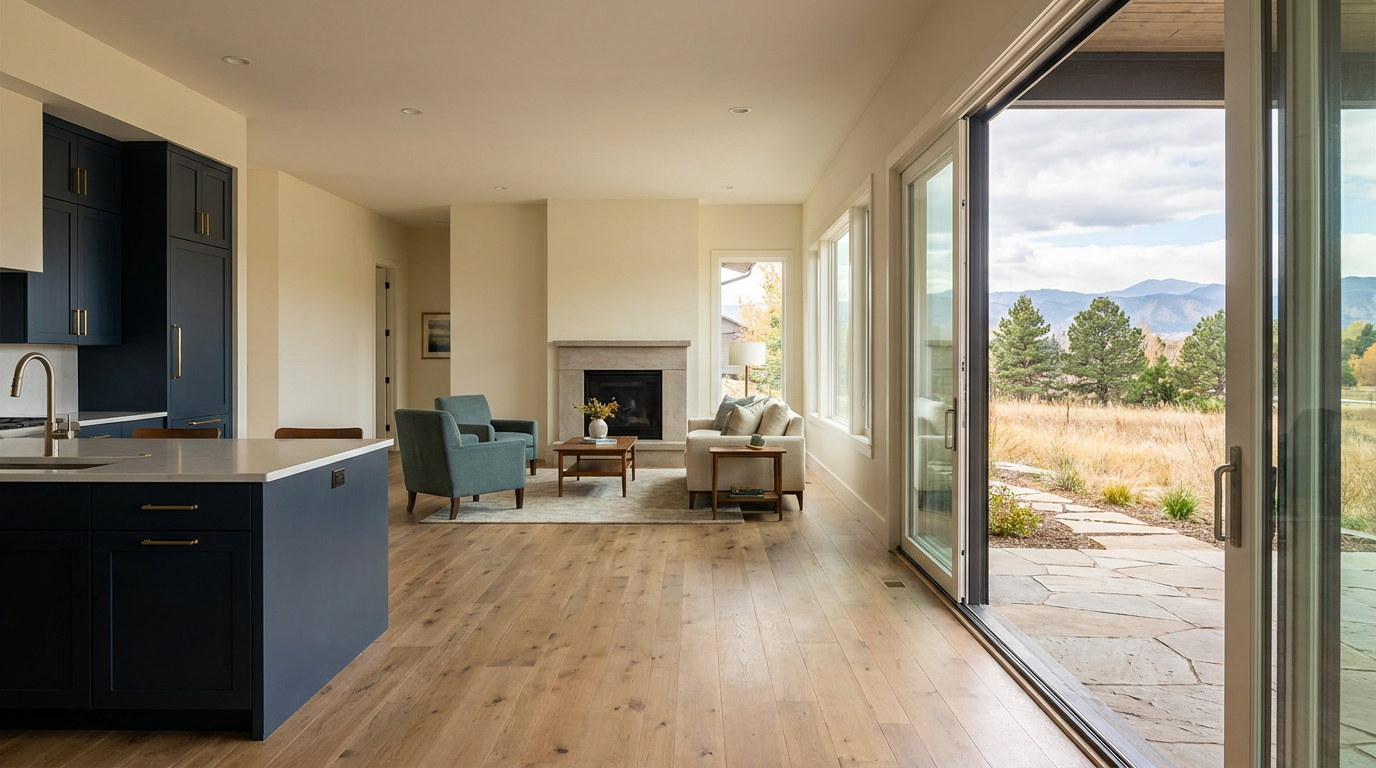
You bought the house because you were done carrying laundry upstairs. Now you're selling, and the obvious headline seems to be “single-level living.” Fair enough. But does the house actually deliver that from the driveway to the bedroom, or does the buyer discover three garage steps, basement laundry, and a sunken living room? Those details don't make it a bad house. They change the promise. For a Broomfield seller, the opportunity isn't simply to advertise a ranch-style floor plan. It's to show exactly how the home makes daily life easier—and price the whole property, not just its most appealing label.
A ranch-style label doesn't tell the whole story
Ranch-style, single-level, and main-floor living often get used as if they mean the same thing. Buyers may read them very differently. One wants the kitchen, bedroom, bathroom, and laundry on one floor. Another wants no interior stairs at all. Someone else is happy with a basement, provided going downstairs is optional rather than part of every Tuesday.
Before writing the listing, trace a normal day through the house. Start where someone would actually park. Carry imaginary groceries inside. Find the laundry, outdoor seating, and the bathroom a guest would use. Note every step and level change. It's a small exercise that can expose a big gap between the description and the experience.
Then describe what you have plainly. “Primary bedroom and laundry on the main floor, with additional rooms in the basement” gives buyers something useful. “Stair-free living” doesn't belong in the copy if stairs interrupt that route. Accuracy isn't timid marketing. It helps the right buyer recognize a fit before they walk through the door.
Show the Broomfield home, not an imagined buyer
Don't assume a single-level home belongs to one stage of life. A buyer may want fewer stairs, flexible work space, easier furniture moving, or simply a layout that keeps everyone connected. Sell the function. There's no need to invent a demographic to explain why the house works.
In Broomfield, carry that explanation beyond the front door. A main-floor layout and an easy-to-manage property aren't automatically the same thing. A sloping driveway, deep yard, exposed front walk, or long route from parking can change the experience. Colorado snow makes the arrival route worth looking at honestly. So does the summer work required by the landscaping.
For an attached or patio-style property, verify who handles exterior maintenance and snow removal before making claims. For a detached house, show the actual outdoor setup. If a nearby path is part of the appeal, describe the real connection, including crossings or grade changes you've confirmed. “Convenient” is an opinion. A clear description lets buyers decide for themselves.
Price the usable layout, not a presumed premium
“Ranches are hard to find, so ours should bring more.” Maybe. But a feature buyers value isn't a blank check. Scarcity only helps when buyers want the available home enough to choose it over their alternatives. Condition, setting, room sizes, parking, and outdoor work still matter.
A Broomfield pricing review should separate above-grade living space from basement space rather than treating every finished square foot as interchangeable. A large finished basement can be valuable. It may not solve the problem for someone who needs another usable bedroom or office on the main floor. Total square footage alone misses that distinction.
I'd start with relevant local sales and current competition, then ask what else the likely buyer would seriously consider. That might include another ranch, a patio home, or a two-story with a main-floor primary suite. Those aren't automatic equivalents. They're alternatives to investigate. Your pricing case gets stronger when it explains meaningful differences instead of leaning on the word “rare.”
Make the layout easy to understand before the showing
Beautiful photographs can still leave a buyer asking, “Wait—where's the laundry?” That's a missed opportunity. For a home whose advantage is daily function, the floor plan isn't an afterthought. It should identify levels, rooms, and important transitions clearly, with details checked before publication.
The photo sequence should help buyers understand how spaces connect, not just present a collection of attractive corners. Show the relationship between the kitchen, living area, bedrooms, and outdoor access. If the basement is a bonus rather than a necessity for daily living, make that distinction visible. Buyers shouldn't need detective skills to work out the house.
Preparation should support the same story. Remove furniture that blocks natural walking routes. Clear the garage entry. Make sure doors open freely and lighting helps people see transitions. Don't install a grab bar or remove a rug and then call the house “accessible.” That word can imply more than you've established. Describe specific features and let buyers assess their own requirements.
- Show the everyday entrance, including any steps.
- Label the laundry location and each floor accurately.
- Photograph useful connections between rooms.
- Clear pathways without disguising permanent obstacles.
Match the selling plan to the move you need
The property's advantage matters. So does your reason for selling. If you're leaving this single-level home because the yard has become too much, spending months turning the landscaping into a showpiece may work against your goal. If you're buying another home with very specific layout requirements, the availability of your next place may matter more than a preferred launch date.
An open-market launch can let buyers compare and respond to the home's strengths. A more private approach may reduce disruption, but reaching fewer buyers can limit competitive feedback. Buying first may give you room to move and prepare, if the finances and available options support it. None of these choices becomes correct just because the house is a ranch.
Start with two questions: What does this home genuinely make easier for its next owner? And what must this sale make easier for you? Put both answers on paper before choosing the price, preparation budget, or launch plan. That's a more useful starting point than assuming one floor does all the selling.
Frequently asked
Can I market my home as single-level if it has a basement?
Be specific rather than relying on that phrase alone. If the essential daily spaces are on the main floor, say so, and clearly identify the basement. Buyers should understand which activities require stairs and which don't.
Does a ranch-style home sell for more in Broomfield?
Not automatically. The layout may appeal to buyers, but any price advantage needs support from relevant sales and current alternatives. Main-floor space, condition, location, and maintenance demands all affect the comparison.
Should I move the laundry upstairs before selling?
Don't assume the project will pay for itself. First evaluate feasibility, cost, any approvals needed, and the space you'd sacrifice. Compare that investment with selling the current layout at a price that reflects its tradeoffs.
What's the most useful first step before listing?
Walk from parking through every essential daily task and note the stairs, tight passages, and useful connections. That simple route gives you a practical starting point for accurate marketing, focused preparation, and a better pricing conversation.