
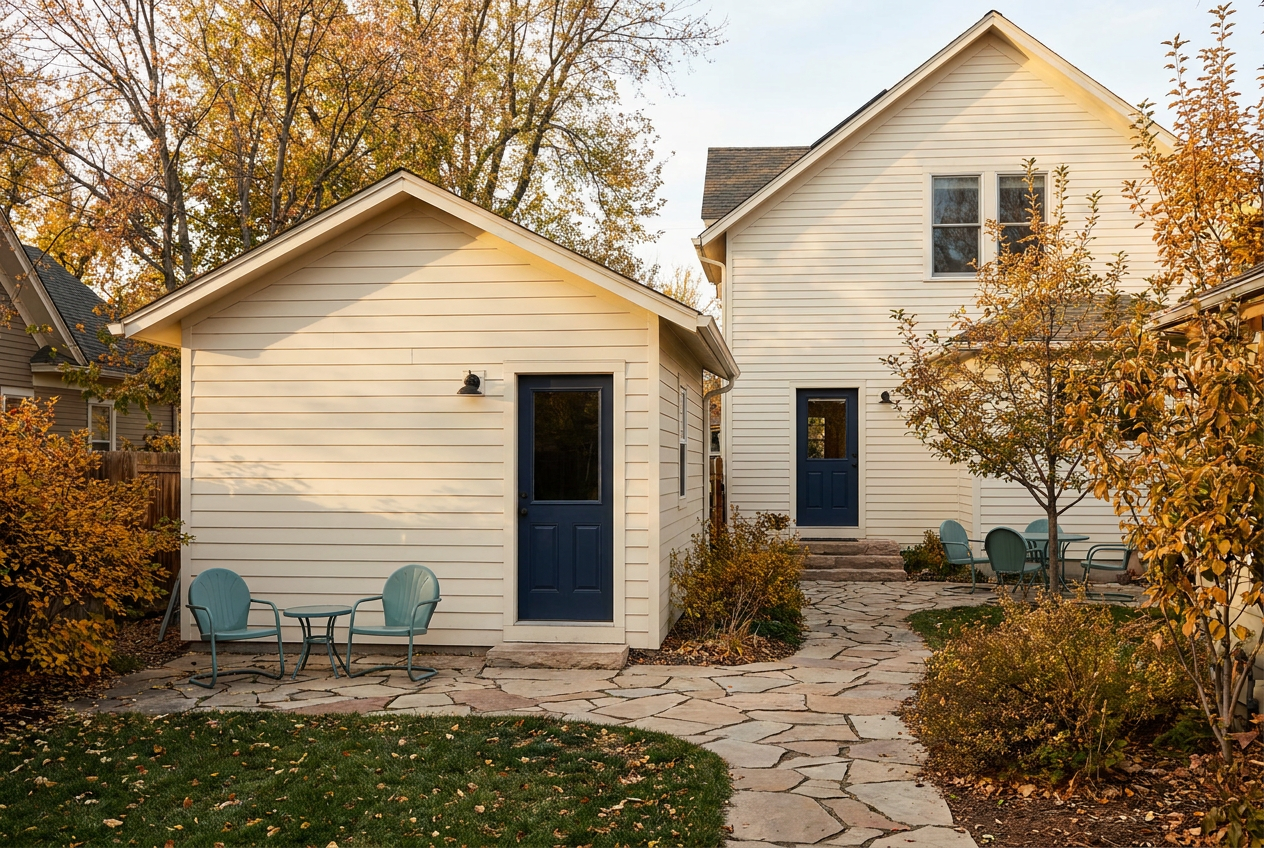
You added a separate living space because it solved a problem. Now you’re selling, and you’d like buyers to recognize what it’s worth. Fair enough. But a buyer may see something different: room for guests, possible rental income, extra upkeep, or a second kitchen they don’t need. Selling a home with an ADU in Longmont starts with that gap. The strongest case isn’t “two homes for the price of one.” It’s a clear explanation of what the space is, what’s documented, and how it makes this particular property more useful.
First, establish what you’re actually selling
An accessory dwelling unit, or ADU, generally refers to a secondary, self-contained dwelling on the same property as a primary home. But a kitchenette and a separate door don’t settle its official status. Neither does the name you’ve used for years. “Guest house,” “in-law suite,” and “rental apartment” can describe very different things.
Before choosing listing language, gather the available permit records, approved plans, and any applicable final inspection or occupancy documentation. Confirm the property’s governing jurisdiction rather than relying on its Longmont mailing address. Then ask the appropriate local office to clarify what its records establish, including whether any approvals or restrictions need attention when ownership changes.
This isn’t about burying a good feature under paperwork. It’s about keeping the sales story from getting ahead of the facts. If the records support an ADU, say so accurately. If they establish something else—or leave questions unanswered—resolve what you can and describe the space without upgrading its status through creative adjectives.
Make the Longmont location part of its usefulness
An ADU doesn’t exist separately from the property around it. On an older lot near downtown Longmont, buyers may pay close attention to alley access, parking, and how much outdoor space remains between the buildings. On a property elsewhere in the city, the bigger questions may be the route from the street, separation from the main house, or applicable association restrictions. Evaluate the actual address, not a neighborhood stereotype.
Walk the property as someone who has never been there. Can you find the second entrance without instructions? Does the path cross the main home’s patio? Where do trash bins go? Can both living spaces use the yard comfortably? A separate unit can offer privacy on paper while putting everyone outside the same kitchen window.
Show those relationships honestly. A site sketch, useful exterior photographs, and a clearly labeled floor plan can explain more than a paragraph about “endless possibilities.” If the ADU trades yard space for living space, acknowledge the tradeoff. You don’t need every buyer to prefer it. You need the right buyers to understand it.
Price the property, not the income story
The tempting math goes like this: the main house is worth one amount, the ADU cost another amount to build, and potential rent adds a premium. Unfortunately, buyers don’t have to accept our spreadsheet. Construction cost is useful history. It isn’t proof of resale value.
Pricing should start with the whole property and relevant closed sales, then account for differences in condition, layout, location, and the secondary space. Truly comparable ADU properties may be limited. That calls for a more careful range of evidence, not a confident number built on a loosely similar listing. Don’t assume the ADU’s area should simply be added to the main home’s square footage; confirm the applicable reporting conventions.
Actual rental records, if available and appropriate to share, can provide context. Projected rent is a different thing. Buyers need to independently evaluate permitted uses, expenses, financing, insurance, and any rental restrictions with the relevant professionals. Market the documented feature. Don’t promise the buyer a business result.
Prepare the connection between the two spaces
Sellers often focus on making the ADU itself look good. Fresh paint. Clean counters. A bed that doesn’t swallow the room. All worthwhile. But the awkward questions usually live between the buildings—or between the floors.
Prioritize preparation that makes the arrangement understandable. Label photographs so buyers know which kitchen belongs to which space. Show the entrance and connecting route. Explain shared systems and outdoor areas accurately. If someone occupies the unit, build access around the applicable agreement and requirements rather than promising unrestricted showings.
A short property information sheet can answer the practical questions below. Use verified information, and mark unknowns as unknowns. Buyers can work with a limitation. Discovering it after they’ve pictured something else is harder.
- Which entrances, parking areas, and outdoor spaces serve each dwelling?
- Are heating, cooling, laundry, and utility meters shared or separate?
- What maintenance or improvements have been completed, and what records are available?
- Is the unit occupied, and what agreements or obligations need professional review?
Choose the selling approach around your outcome
If your priority is testing what buyers will pay for a well-documented, vacant ADU property, a public launch may make sense. Give buyers enough information before the showing to recognize the setup. Attention without understanding just produces more questions.
If privacy, an existing occupant, or a difficult move makes broad showing access unattractive, a more controlled process or an off-market conversation may deserve consideration. The tradeoff is less opportunity to test competing demand. A simpler offer might still suit your situation, but compare the likely net, obligations, and uncertainty—not just the convenience of fewer appointments.
Before spending on staging or settling on a price, answer one question: What can a buyer confidently understand about this ADU today? Start with the missing pieces. A useful space becomes easier to value when buyers don’t have to invent the explanation themselves.
Frequently asked
Does an ADU automatically increase my Longmont home’s value?
Not by a fixed amount. Its contribution depends on documented status, quality, privacy, functionality, and buyer demand. Some buyers value separate living space; others would rather have more yard. Relevant sales help establish a supportable pricing position.
Should I advertise potential rental income?
Only with careful context and support. Distinguish actual historical income from estimates, and don’t imply that a particular rental use is permitted without verification. Buyers should independently assess restrictions, expenses, and suitability. An income projection isn’t a guarantee.
Do I need to renovate the ADU before selling?
Not necessarily. Start with condition, documentation, and clarity. Cleaning, addressing appropriate maintenance, and explaining the layout may help more than new finishes. Ask whether the proposed work solves a buyer concern worth the expense—or simply makes the space prettier.