
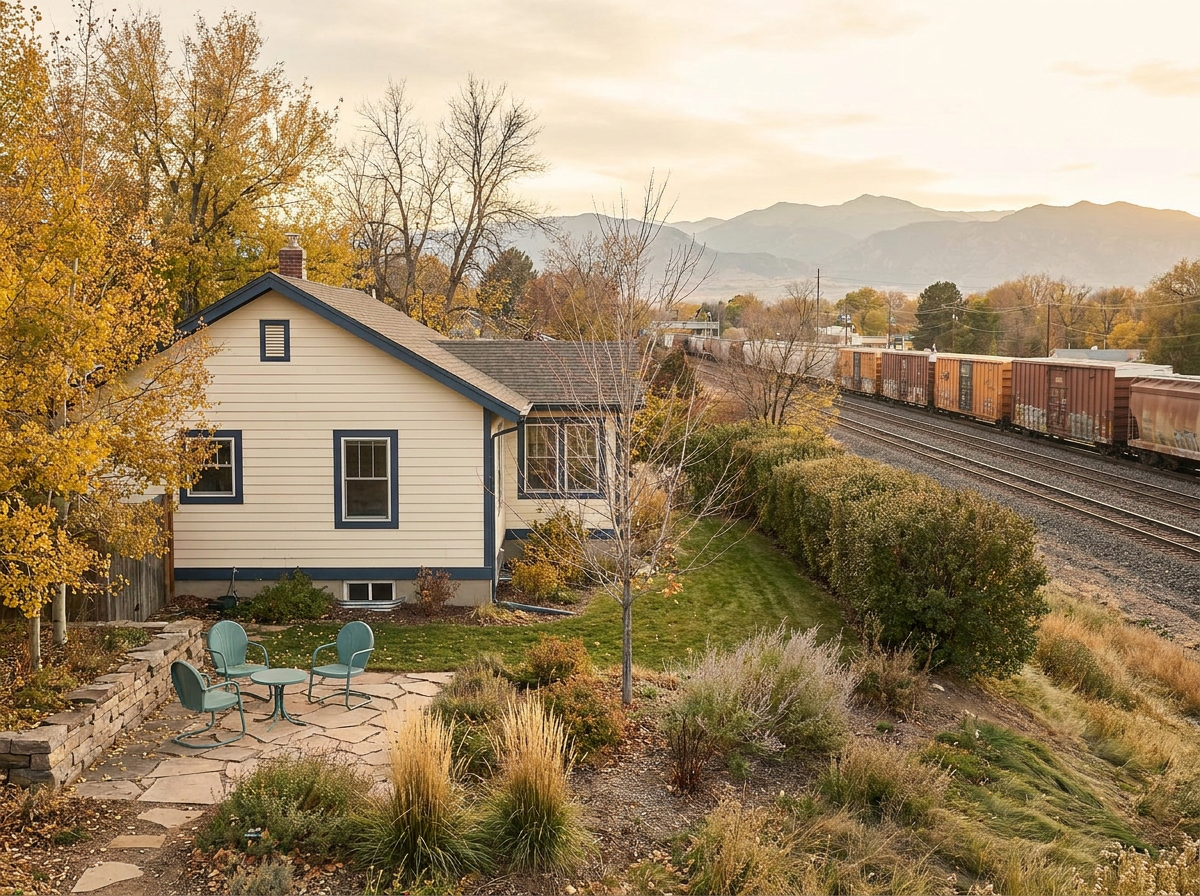
“We barely notice the train anymore. Are buyers really going to care?” Some will. Some won’t. But buyers visiting your Longmont home for the first time haven’t had years to get used to its soundtrack. They’re deciding what living there might feel like, often in less than an hour. The answer isn’t to apologize for the location or pretend the tracks aren’t there. It’s to make the tradeoff understandable. A railroad-adjacent home needs a strategy built around its actual conditions, its useful advantages, and a price that makes sense beside the alternatives. You’re selling a whole property—not asking someone to overlook one inconvenient detail.
Start With the Property, Not a Railroad Discount
Longmont’s freight rail corridors are part of the city’s working landscape. But “near the tracks” describes very different experiences. A backyard facing the corridor is not the same as a home several blocks away. A nearby crossing can introduce different sound and access questions than a stretch of track without one. Distance matters. So do orientation, windows, outdoor spaces, and where the bedrooms sit.
That’s why I wouldn’t start with an automatic percentage discount. I’d start with the homes a buyer could realistically choose instead. Look for recent sales with similar location tradeoffs, then examine condition, layout, lot utility, and the competition currently available. A nearby sale on a quieter interior street may provide context without being a clean comparison.
Your home may also offer something competing listings don’t: a usable garage, a better layout, an updated kitchen, or convenient access to the parts of Longmont the buyer uses. Those advantages belong in the pricing discussion. They don’t erase the railroad. The railroad doesn’t erase them, either.
Replace “You Get Used to It” With Useful Information
“You get used to it” is an honest description of your experience. It’s not a reliable prediction of someone else’s. A buyer who works from home may evaluate the property differently from someone who spends much of the day elsewhere. Someone who loves your patio may pay particular attention to outdoor sound.
Before listing, walk through the questions a buyer is likely to ask. Separate what you know from what you assume. Your observations can help, but they aren’t a guaranteed operating schedule. Don’t promise that trains only run at certain hours or that a quiet showing represents every day. If a buyer wants another visit to understand the setting, reasonable access can support a more informed decision.
Review location-related questions and your disclosure documents with your listing broker; get legal guidance if a question calls for it. A listing description is not a substitute for that process. The goal is straightforward information, not a carefully worded way around an uncomfortable subject.
- Where is sound most noticeable: the yard, bedrooms, or main living area?
- Have you personally noticed vibration, and under what circumstances?
- Which nearby crossings affect the routes you actually use?
- What window upgrades or other relevant improvements can you document?
Give Buyers a Reason to Care Before They Visit
Marketing should explain why this particular home deserves consideration. Not “charming Longmont gem.” What can someone actually do here? Set up a separate office? Store bikes without surrendering the garage? Enjoy a private courtyard? Reach downtown Longmont’s Main Street businesses by a route they’d find practical? Use accurate, property-specific details rather than broad claims about convenience.
Photographs should show the home well without creating a false impression of its surroundings. If an aerial image helps explain the lot and nearby corridor, use it thoughtfully. Cropping every image to suggest a secluded setting can create a disappointing showing. Plenty of clicks, very little confidence.
Don’t position freight tracks as a passenger-transit amenity or lean on unverified future rail plans. Sell what exists. The right buyer needs a compelling reason to consider the property and enough context to decide whether the tradeoff works. That’s more useful than attracting a crowd that leaves surprised.
Spend on Comfort, Not on Hiding the Tracks
It’s tempting to tackle the location with a large improvement budget. New windows. More fencing. A wall of evergreens. Pause before writing checks. Some improvements may help comfort or privacy, but they won’t necessarily address the sound that concerns buyers. A visual screen and an acoustic solution are not the same thing.
Start with ordinary maintenance: windows that close properly, worn door seals, and other fixable gaps. If you’re considering a substantial sound-related project, get a qualified assessment of what it can reasonably accomplish. Don’t sell replacement windows as “soundproofing” without support, and don’t assume landscaping will solve train noise or vibration.
Then compare the proposed expense with your goal. If you need a simpler sale, a well-supported price may make more sense than a major project. If an improvement benefits everyday use and fits your budget, it may be worth considering. The question isn’t whether you can spend more. It’s whether that spending improves your selling position enough to justify it.
Choose a Sale Plan That Fits Your Tolerance for Uncertainty
An open-market launch can help you reach buyers who value the home’s particular combination of space, condition, location, and price. It also means accommodating showings and hearing candid reactions. If the same location concern appears repeatedly, evaluate it alongside competing listings, showing activity, and offers. Don’t treat one blunt comment as a verdict—or dismiss a consistent pattern.
A cash or off-market option may be worth comparing if privacy, preparation limits, or timing matter more to you than testing broader demand. Compare actual written terms and estimated net proceeds, not a promised easy sale. A different method doesn’t make the tracks disappear; it changes how you approach the transaction and which tradeoffs you accept.
Before choosing, answer one question: What would make this sale successful for you? More opportunity to test price? Fewer disruptions? A move coordinated with your next home? Start there. Then build a plan that acknowledges the location without letting it become the entire story.
Frequently asked
Do train tracks always lower a Longmont home’s value?
There’s no reliable blanket adjustment. The effect depends on the property’s actual setting, nearby crossings, buyer alternatives, and other features. Relevant comparable sales provide a better starting point than a fixed discount applied to every home near a rail corridor.
Should I schedule showings when trains aren't running?
Plan for reasonable access, not a carefully engineered quiet window. Train activity can vary, and you shouldn’t imply that one visit captures every condition. Allowing a second visit can help a buyer evaluate the setting more confidently.
Should I replace my windows before selling near the railroad?
Not automatically. Consider their condition, documented performance, installation cost, and your selling timeline. New windows may improve comfort without resolving every sound or vibration concern. Before committing, compare a qualified contractor’s assessment with a pricing plan that leaves the windows as they are.