
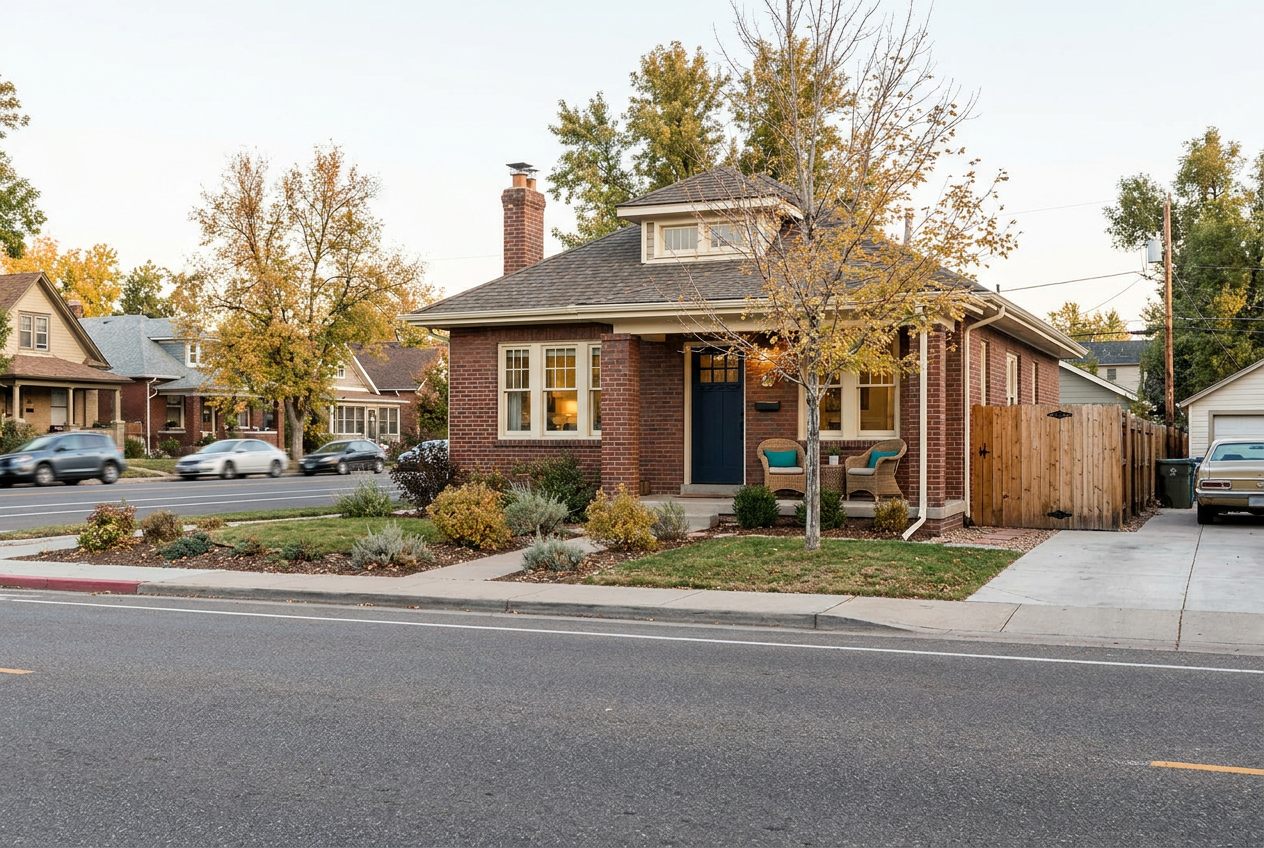
Selling a home on a busy street in Denver does not mean apologizing for the address. It means understanding the trade-offs buyers will evaluate—and building your plan around them. A house along Broadway, Federal Boulevard, or Colorado Boulevard competes differently from a similar house tucked several blocks into a neighborhood. Traffic, parking, driveway access, and outdoor space all influence that comparison. So can convenient transit, nearby businesses, and a shorter route to daily destinations. The goal is not to convince every buyer that the street does not matter. It is to give the right buyers an accurate reason to consider the home.
Start With How the Street Actually Functions
“Busy street” is not one uniform property characteristic. A home facing a commercial corridor has a different experience from one backing to a major road. A corner lot near a signal differs from a midblock property with alley access. Even along the same Denver corridor, setbacks, intersections, nearby uses, and building orientation can change what buyers hear and how they enter the property.
Before deciding what to fix or how to price, walk through the daily experience. Stand in the bedrooms, sit in the backyard, and pull into the parking area. Do this at more than one time of day. Along the Front Range, open-window weather and leafless months can also change how exposed a property feels. Summer listing photos do not tell the whole story.
Document the practical details rather than relying on a broad claim like “surprisingly quiet.” Buyers need to understand which rooms face the street, where guests can park, and whether the backyard offers meaningful separation from traffic.
- Check driveway entry and exit during typical commuting hours.
- Confirm actual parking restrictions before describing street parking.
- Identify usable outdoor areas and their relationship to the road.
- Note transit access and nearby destinations without guessing travel times.
Choose Comparable Sales That Account for the Address
The beautifully updated house around the corner may be relevant, but it is not automatically your best pricing benchmark. Interior condition, square footage, and bedroom count matter. So does street exposure. A pricing analysis that ignores the difference between a through street and an interior block leaves the seller with an incomplete picture.
Look for sales with similar road conditions, then examine how their other features compare. Were they renovated? Did they have garages, deeper setbacks, or protected yards? When close matches are limited, expand the search carefully rather than treating a distant busy-road sale as interchangeable. Active listings show current alternatives; closed sales show what buyers previously accepted. Neither should be read in isolation.
There is no universal busy-street discount that applies to every Denver property. The task is to evaluate the whole package against the buyer’s alternatives. Setting the price as though the location trade-off does not exist—and waiting for feedback to prove otherwise—is not a pricing strategy.
Prepare for Comfort, Not for Concealment
Preparation should address specific friction points. Repair a sticking gate, improve lighting along the path from the garage, and make the backyard feel usable. If damaged weatherstripping or a poorly fitting window allows obvious drafts and noise, investigate the repair. These are different decisions from replacing every window because you hope buyers will overlook the road.
Large projects need a clearer business case. New windows, fencing, or extensive landscaping may improve the ownership experience, but their resale value is uncertain. Get qualified assessments and estimates before committing. Check applicable permit requirements, fence rules, and visibility constraints. Plants can soften a view, but a row of shrubs should not be presented as a proven sound barrier.
Inside, arrange rooms so buyers can understand their intended use. Keep bedroom windows accessible and let people evaluate the space without loud music covering background sound. If you have made relevant improvements, retain the invoices and product information. Describe what was installed, not an unsupported promise that the home is soundproof.
Market the Benefits Without Hiding the Trade-Off
A listing should make the address understandable before a buyer arrives. Show the front approach, parking arrangement, backyard, and relationship between the house and street. Cropping every exterior image to exclude the surroundings may generate curiosity, but it can also produce showings that end at the curb. Exposure is not useful when the presentation creates the wrong expectation.
Lead with strengths that are real: an accessible garage, a rear-facing primary bedroom, a functional yard, or proximity to businesses and transit. Be precise. “Alley-access garage” tells buyers more than “easy parking.” “Rear patio behind the home” is more credible than calling the property a secluded retreat when traffic remains audible.
Offer reasonable opportunities to experience the property under different conditions. A quiet midday showing may be convenient, but buyers may also want to return during commuting hours. Honest access helps them make an informed decision. It does not replace required disclosures; ask the appropriate professionals how to handle property-specific disclosure questions.
Use Buyer Feedback to Diagnose the Right Problem
After launch, separate objections you can address from characteristics you cannot change. Confusion about parking may call for better information. A neglected side yard may need attention. Repeated comments that similarly priced homes offer quieter settings point toward a positioning or pricing issue—not necessarily a need for more advertising.
Evaluate feedback alongside showing activity, competing inventory, and the consistency of buyer reactions. One person’s objection is not the entire market. A repeated pattern deserves attention. Before listing, agree on how those signals will be reviewed so decisions are not driven by frustration after each showing.
When an offer arrives, compare its terms and contingencies as well as its price. A buyer’s stated comfort with the street is useful context, not a guarantee of closing. Selling this kind of Denver home starts with a straightforward principle: you cannot move the house, but you can make the trade-offs clear and give buyers a well-supported reason to choose it.
Frequently asked
How much does a busy street affect a Denver home’s value?
There is no reliable universal percentage. The effect depends on competing homes, street conditions, property layout, parking, and other features. A useful pricing analysis considers comparable road exposure rather than assuming nearby interior-block sales support the same price.
Should I replace the windows before selling?
Not automatically. Start with their condition and obtain qualified advice about specific problems. Repairs may be more practical than replacement. A major window project should be weighed against its cost and uncertain resale benefit, not treated as a guaranteed return.
Should listing photos show the busy road?
The photography should accurately represent the property’s setting. Include useful views of the approach, frontage, parking, and outdoor areas. Buyers should not arrive expecting a tucked-away location because every image carefully excluded the surrounding street.
What if buyers like the house but reject the location?
Look for a pattern across feedback and competing listings. You may need clearer marketing or different pricing. Additional cosmetic spending will not necessarily solve a location objection, especially when buyers have quieter alternatives at a similar asking price.