
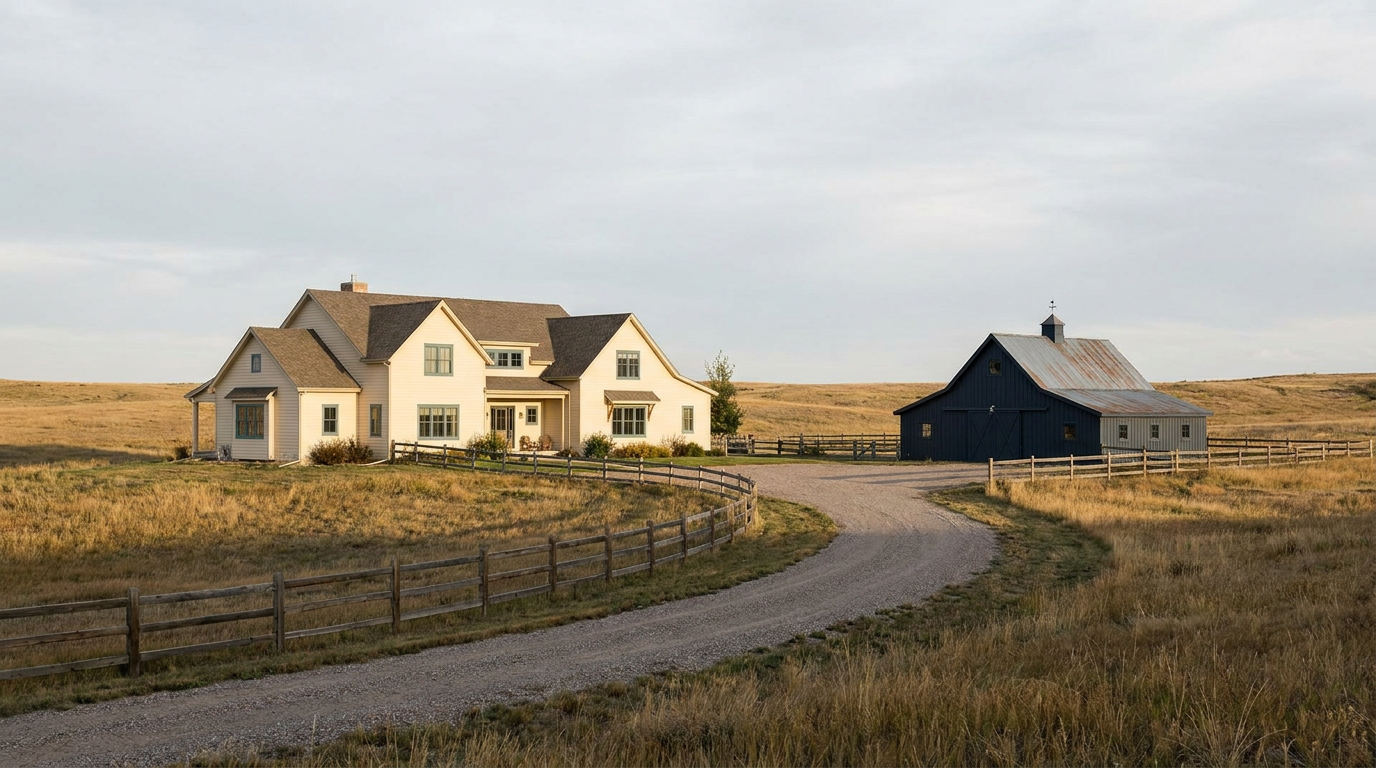
Selling a home with acreage in Parker means selling two things at once: the house and the responsibility that comes with the land. Buyers may love the pasture, the privacy, or the room for a workshop. They may also wonder who plows the road, what the well can support, and whether that barn fits their plans. Those questions are not distractions from the sale. They are central to it. For properties around Parker’s rural edges, a strong listing strategy makes ownership understandable without overselling what the acreage allows.
Start With the Property’s Actual Identity
A Parker mailing address does not necessarily mean a property sits within the Town of Parker. Nearby acreage properties can fall under different jurisdictions, subdivision rules, and service arrangements. That distinction matters when buyers ask about land use, road maintenance, or future improvements. Establish the property’s actual jurisdiction before writing the marketing copy.
Build a factual description from records, not neighborhood assumptions. An existing fence may not establish a boundary. A neighbor’s horses do not establish what another parcel permits. A large outbuilding does not automatically mean a buyer can operate a business there. Existing use and allowed use are separate questions.
Gather available surveys or improvement location documents, recorded access information, and relevant covenants. Have the appropriate professionals explain their meaning and limitations. The marketing goal is straightforward: describe what exists, identify what is documented, and avoid presenting an unverified possibility as a property feature.
Make Well and Septic Information Easy to Follow
Not every acreage property near Parker uses a private well and septic system. For those that do, unfamiliar systems can become a major source of buyer hesitation. Saying “the water has always been fine” offers little help to someone who has only owned a home with municipal utilities.
For a well, assemble available permit information, service records, and any existing testing or performance reports, with their dates clearly shown. Well permits can limit allowed uses; acreage alone does not establish permission to irrigate extensively or water livestock. Direct use questions to the Colorado Division of Water Resources or an appropriate specialist rather than interpreting the permit in an advertisement.
For septic, gather available system records and maintenance history. Ask the relevant local public health agency about requirements that may apply to a transfer. Older records can provide context, but they are not a substitute for a current evaluation when one is needed. Organizing this information early helps sellers distinguish a paperwork gap from a condition that needs attention.
Explain Access Through a Colorado Winter
A driveway that looks inviting on a clear September afternoon can raise different questions after snow, drifting, or a freeze-thaw cycle. Buyers considering acreage outside Parker’s denser neighborhoods need to understand the route from the maintained road to the garage—not just the view from the kitchen.
Clarify who maintains each part of that route and gather any applicable road or shared-driveway agreements. Describe known arrangements accurately without promising that a road will always be cleared by a particular time. Where access rights are unclear, title and legal professionals should address them; listing copy cannot resolve an easement question.
The same practical approach applies to other services. Identify the internet connection currently used, trash arrangements, and any propane equipment or service agreements. Encourage buyers to verify availability, capacity, and costs for their needs. A seller’s current internet setup, for example, may not answer whether a buyer’s remote-work demands will be met.
Show Usable Land, Not Just the Acreage Total
Two parcels with similar acreage can offer very different ownership experiences. Slope, drainage, vegetation, fencing, access, and the placement of improvements all affect how the land functions. Buyers interested in horses may evaluate the property differently from buyers seeking privacy or a place to store equipment.
Photography should explain those differences. Use ground-level images to show the relationship between the house, outbuildings, and outdoor spaces. Aerial photography can add useful context, but any boundary overlay should be based on reliable information and clearly identified as approximate when appropriate. A marketing image is not a survey.
Preparation should make the property easier to assess, not disguise its condition. Clear access to outbuildings, remove abandoned materials, and make equipment areas orderly. Document known drainage or maintenance concerns through the appropriate disclosure process. Avoid creating a temporary appearance of usability that the property cannot consistently support.
- Show access into barns and workshops, not only their exterior doors.
- Describe installed features such as power or water only when verified.
- Distinguish maintained outdoor areas from land that requires additional work.
- Avoid labels such as “horse-ready” unless the underlying features and permitted uses support them.
Build the Sale Around Fit, Not a Lifestyle Promise
Acreage buyers are not one audience. Some want an equestrian setup. Others want separation from neighbors without taking on extensive land management. Marketing every property as a dream ranch attracts attention, but it can also attract buyers whose expectations do not match the property.
Position the home around its strongest documented uses and its actual maintenance demands. Pricing should reflect relevant competing properties, including differences in access, land utility, house condition, and outbuildings. The amount spent on a barn or fence is not automatically the value buyers will assign to it. Where comparable sales are limited, acknowledge the uncertainty rather than manufacturing precision.
Before launching, organize a property information packet that interested buyers can review alongside the required disclosures. Leave room for independent inspections and verification, including insurance questions specific to the property and intended use. Selling acreage well does not mean answering every question yourself. It means knowing which facts you can support, which questions need a specialist, and what makes this particular property a good fit.
Frequently asked
Should I advertise my Parker acreage home as horse property?
Only when the description is supported by the property’s features and verified use rules. Acreage and a barn alone do not establish suitability. Check applicable restrictions and water-use limitations, and describe the actual facilities rather than implying that every equestrian use is allowed.
Do I need a new survey before selling acreage?
Not automatically. Start by locating existing documents and identifying questions about boundaries, fences, improvements, or access. Your agent, title company, and a licensed surveyor can help determine what additional documentation may be useful or required for the transaction.
Will a barn or workshop increase my sale price?
It may appeal to the right buyer, but its contribution depends on condition, functionality, documentation, and competing properties. A specialized building can have limited appeal outside its intended use. Evaluate it within the whole property rather than assuming its construction cost will be recovered.
Should I hide equipment and maintenance supplies for photos?
Remove clutter and store materials neatly, but do not erase the practical side of ownership. Clean, accessible equipment areas help buyers understand the property. The goal is an orderly presentation, not the impression that acreage requires no upkeep.