
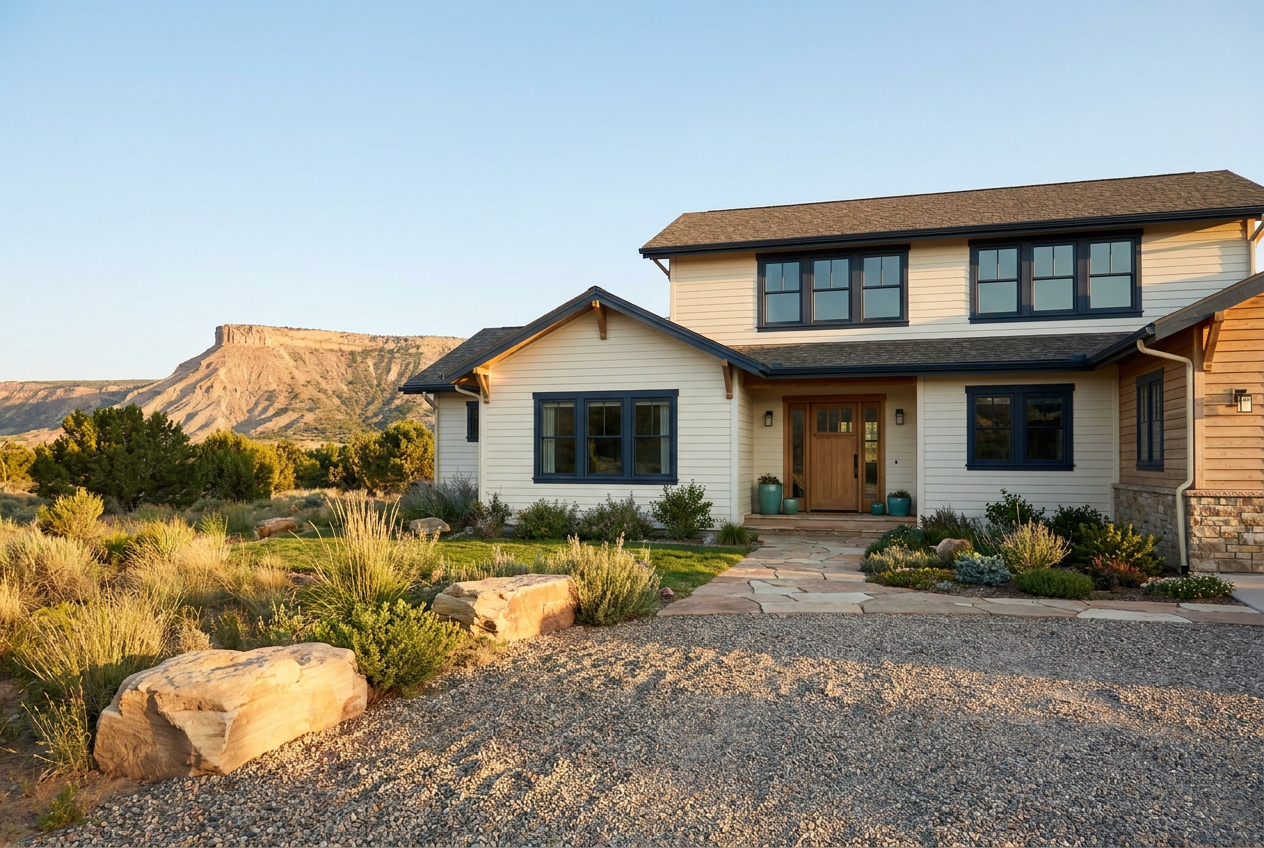
Selling a home in Golden starts with understanding what you are actually selling. A house near downtown, a property below North Table Mountain, and a foothills home with a Golden mailing address can offer very different versions of daily life. Buyers may arrive interested in trails and mountain views, but their decisions often turn on more practical questions: How does the driveway handle winter? What needs maintenance? What does the address tell them—and what does it leave out? A useful selling strategy answers those questions before uncertainty takes over.
Start With the Location, Not Just the Golden Address
Golden is not one uniform housing experience. Homes near downtown and Clear Creek offer a different setting from properties around the mesas or farther into the foothills. Even nearby streets can differ in slope, traffic, trail access, and proximity to commercial activity. A Golden mailing address also does not necessarily mean a property sits within Golden city limits. Your listing should describe the actual setting rather than letting buyers fill in the blanks.
Before marketing begins, verify the details that shape a buyer’s expectations. Identify the applicable jurisdiction, utility providers, and any association or special district connected to the property. Confirm school assignments through the relevant district rather than relying on an old listing. These are not glamorous marketing details, but they help prevent avoidable surprises. The goal is not to make every Golden property sound like a downtown cottage with mountain privacy. It is to make your property’s particular advantages clear.
- Describe nearby amenities without implying direct or private access.
- Distinguish the mailing address from the property’s jurisdiction.
- Verify property details before reusing information from a previous listing.
Treat the Lot and Exterior as Part of the Product
In Golden, the land around a home can matter as much as the rooms inside it. A sloping yard may deliver an open view while offering less flat space for outdoor activities. A deck may be the best living area on the property, but buyers will notice its condition. Retaining walls, drainage paths, exterior stairs, and driveway surfaces deserve attention before photography—not just a quick sweep before the first showing.
Walk the property as someone seeing it for the first time. Look for places where water collects, worn exterior finishes, loose handrails, and landscaping that obscures the home. Colorado’s sun, snow, and freeze-thaw cycles make exterior upkeep especially relevant. If you see signs of a drainage or structural concern, get an appropriate professional assessment instead of covering the symptom with fresh landscaping. Document completed work accurately. A maintained exterior helps buyers evaluate the property; a cosmetic disguise can create more questions than it resolves.
Explain Everyday Access Without Overselling It
“Close to everything” does not tell a buyer much. Golden’s appeal includes access to downtown, outdoor recreation, and regional routes such as US 6, Highway 58, and C-470. But the usefulness of that access depends on the property and the buyer’s routine. A location convenient for one commute may be less convenient for another. Avoid fixed drive-time promises, especially when traffic, weather, or weekend recreation can change the trip.
Give buyers specific, verifiable context instead. Show where the home sits relative to trailheads, shopping, and transportation options. If you describe walkability, consider the actual route, including sidewalks, crossings, and grades—not just the distance on a map. For foothill properties, be prepared for questions about road maintenance, snow removal, driveway grade, and internet service. Verify arrangements and available service rather than assuming buyers will experience what you have. Honest detail is more persuasive than a string of lifestyle adjectives.
- Use accurate maps and clearly identified nearby destinations.
- Describe parking and access arrangements without overstating capacity.
- Let buyers test commute routes and connectivity for their own needs.
Get Ahead of Condition and Insurance Questions
Some Golden-area properties prompt additional questions about wildfire exposure, vegetation, roof condition, and insurance availability. Those concerns are property-specific; a Golden address alone does not establish the risk. Sellers do not need to become insurance experts, but they should expect buyers to investigate coverage early. Your current policy is not a promise that another owner will receive the same terms or cost.
Gather useful records before listing: roof documentation, major system service records, permits where applicable, and receipts for completed mitigation or maintenance work. If the property has a well or septic system, organize the available records and ask qualified local professionals what evaluations may be relevant to a sale. For an association-managed property, collect available information about exterior maintenance responsibilities and community insurance. Avoid calling a home “fireproof” or implying that mitigation eliminates risk. Accurate documentation gives buyers a sounder basis for asking their own inspectors, insurance agents, and other professionals the right questions.
Build Marketing Around Proof, Not Scenery Alone
Mountain views can earn attention. They cannot explain a floor plan, show the relationship between the house and garage, or answer whether an outdoor area is usable. Strong Golden listing photography should show both the appeal and the practical layout. If aerial photography helps explain a lot or its surroundings, use it carefully. Do not imply that nearby open space belongs to the property or add unverified boundary lines.
Pair the images with a concise property information sheet that separates verified features from promotional language. Include meaningful improvements, documented maintenance, and the location details buyers repeatedly ask about. Then make sure showing access allows people to experience the property rather than relying on the photographs. The point is not to overwhelm buyers with paperwork or explain away every trade-off. It is to present a clear, supportable picture of the home. In Golden, the strongest story is usually the specific one: what this property offers, how it lives, and what the next owner should understand.
Frequently asked
Does a Golden mailing address mean my home is in Golden?
Not necessarily. Some properties with Golden mailing addresses are outside city limits. Verify the jurisdiction through official local records and describe it accurately. Buyers may have questions about services, road maintenance, and other location-specific arrangements.
Should I get a pre-listing inspection for my Golden home?
It can be useful when you want a clearer picture of condition before deciding what to address. It is not automatically necessary for every property. Discuss the scope with your listing professional and use qualified inspectors for specialized concerns.
Should I mention winter access when selling a foothills home?
Yes. Buyers benefit from factual information about driveway grade, road maintenance, and snow-removal arrangements. Avoid promising easy access in every storm. Explain what you can verify and let buyers evaluate whether the setup fits their needs.
Can I use nearby trails as a selling feature?
Yes, when the description is accurate. Name relevant trailheads or public access points, and distinguish nearby recreation from direct access. Do not suggest that a route across neighboring land is available unless that access has been verified.