
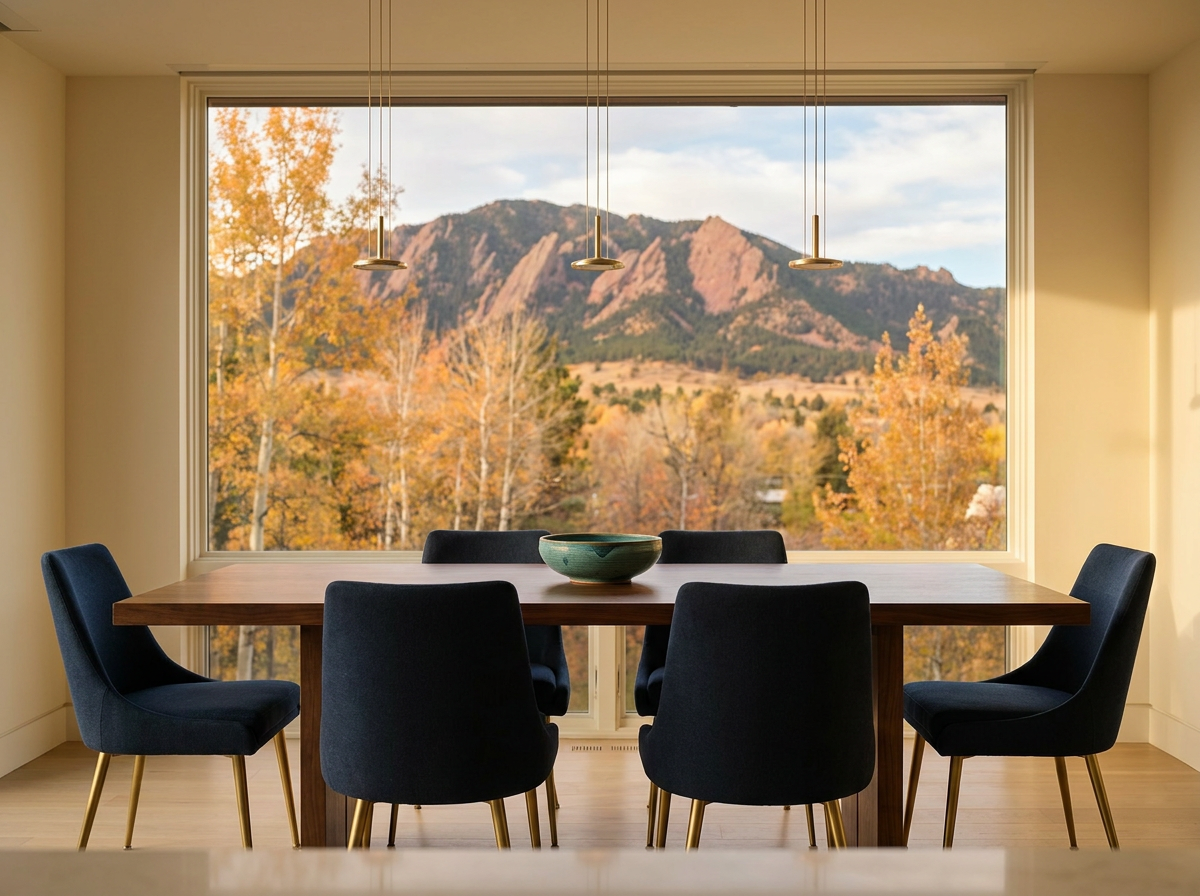
You’ve watched the Flatirons change color from your kitchen for years. Of course that view matters. The harder question: How much will it matter to the buyer who’s also evaluating your kitchen, your driveway, and the house down the street? When you’re selling a home in Boulder, a mountain view can give buyers a reason to pay attention. But it isn’t a separate asset with a tidy price tag. Its value depends on how someone experiences it—and what they have to accept to get it. The goal isn’t to sell the scenery harder. It’s to make the view’s everyday value clear without asking it to carry the entire sale.
First, define the view you actually have
“Mountain views” can describe very different things in Boulder. A broad Flatirons view from the living room isn’t the same experience as a glimpse from an upstairs landing. Neither is imaginary. They just shouldn’t be presented or priced as though they’re interchangeable.
Walk through the house as a buyer would. Where does the view first appear? Can you enjoy it while sitting down, or only while standing at a particular window? Does it belong to the kitchen, a bedroom, the deck, or a corner of the yard? A view woven into ordinary routines gives you a different selling story than one you have to point out.
Season matters, too. In October, changing foliage can reveal sightlines that summer leaves soften or block. Describe those conditions honestly. A winter photograph shouldn’t quietly become a promise of the same view in July. Specific language—such as “Flatirons visible from the west-facing dining area”—does more work than a stack of adjectives.
Price the whole property, not the favorite feature
The tempting calculation goes like this: Take what a nearby house sold for, then add something for the view. The problem is deciding what “something” means. Unless the comparisons support it, that number is usually an attachment wearing a price tag.
A useful pricing review looks at homes that compete for similar buyers, then examines differences in setting, condition, layout, outdoor space, and the quality of the view. Boulder’s foothill-facing streets, elevated lots, and locations farther east offer different combinations. Even two houses on the same street may frame the mountains differently. A nearby sale is a starting point, not an answer.
Look beyond closed sales. Active listings show buyers’ current alternatives. Pending listings can offer clues about what attracted an offer, although final terms may not yet be available. Homes that didn’t sell also deserve attention. If a view property struggled, ask what else was going on before deciding the scenery had no value—or that the seller simply needed more patience.
Show the view from where someone would enjoy it
A drone can produce a gorgeous image from above the roof. Unfortunately, your buyer won’t be having breakfast up there. Aerial photography can explain the setting, but it shouldn’t do the job of showing the view from the house. Buyers notice when the listing’s strongest promise disappears at ground level.
Use photographs taken from realistic positions in the rooms and outdoor spaces where the view matters. Include enough of the room to establish context. An image of mountains alone could belong to almost any listing; a dining area with the mountains beyond it explains something useful. Keep editing faithful to what a visitor will see.
Preparation can be simple. Clean the glass. Open appropriate window coverings. Move furniture that blocks access to a worthwhile window. If the deck has a genuine sitting area, make that use obvious rather than filling it with accessories. You’re helping buyers understand the space, not staging a mountain-themed gift shop.
- Lead with a view photograph only if the in-person experience supports it.
- Show both the outlook and the space it belongs to.
- Label seasonal photographs clearly.
- Keep aerial images distinct from views available inside the home.
Address the tradeoffs before buyers make their own story
An appealing outlook doesn’t erase other questions. Depending on the property, buyers may also notice afternoon glare, deck exposure, window condition, outdoor privacy, or a driveway that requires more thought in winter. These aren’t reasons to apologize for the house. They’re reasons to understand it.
Separate what you know from what you assume. Gather available documentation for relevant window upgrades, shading features, or deck work. Explain existing features accurately rather than promising they solve every comfort concern. If buyers ask whether nearby construction or tree growth could affect the view, don’t call it permanent unless that claim has been properly verified.
Then choose preparation based on your desired outcome. If you want a straightforward sale with limited spending, clean presentation and a price that acknowledges condition may fit. If you have more time, a targeted improvement might remove a distraction. Either way, don’t start an expensive project simply because the view feels worthy of a more impressive room.
Let buyer response test the strategy
Once the home is available, compliments aren’t the same as demand. “Beautiful view” is pleasant feedback. A return showing, a question about possession, or a serious offer tells you more about whether buyers see the entire property as a fit.
Decide in advance how you’ll evaluate the launch. Look at showing activity, repeated objections, competing listings, and the substance of buyer follow-up. If visitors love the outlook but consistently hesitate over condition or price, more mountain photographs probably won’t fix the problem. The next move may involve presentation, a targeted repair, pricing, or terms—depending on what the evidence supports.
Before listing, finish this sentence: “The view makes daily life better here because _____.” If the answer is specific and visible during a showing, you have something useful to build around. Then ask the equally important question: What else must make sense for a buyer to choose this house?
Frequently asked
How much does a mountain view add to a Boulder home’s value?
There isn’t a reliable flat amount or percentage for every property. The view’s scope, visibility from living spaces, seasonal changes, and competing homes all matter. A property-specific comparison is more useful than a blanket premium.
Should I wait until the leaves fall to photograph my home?
Not solely to make the view look bigger. Photograph for your selling schedule and represent seasonal conditions accurately. If you have suitable photographs from another season, clearly labeled supplemental images can help explain the difference.
Do I need drone photography to sell a view home?
Not necessarily. Aerial images can clarify the setting, but eye-level photographs usually explain everyday enjoyment better. Choose photography that answers buyers’ questions rather than adding it because a view home supposedly requires it.
Should I remodel a dated room that has the best view?
Not automatically. First consider cleaning, furniture placement, lighting, and pricing. A remodel adds cost and uncertainty. Ask whether buyers are likely to reject the room—or simply expect its condition to be reflected in the price.