
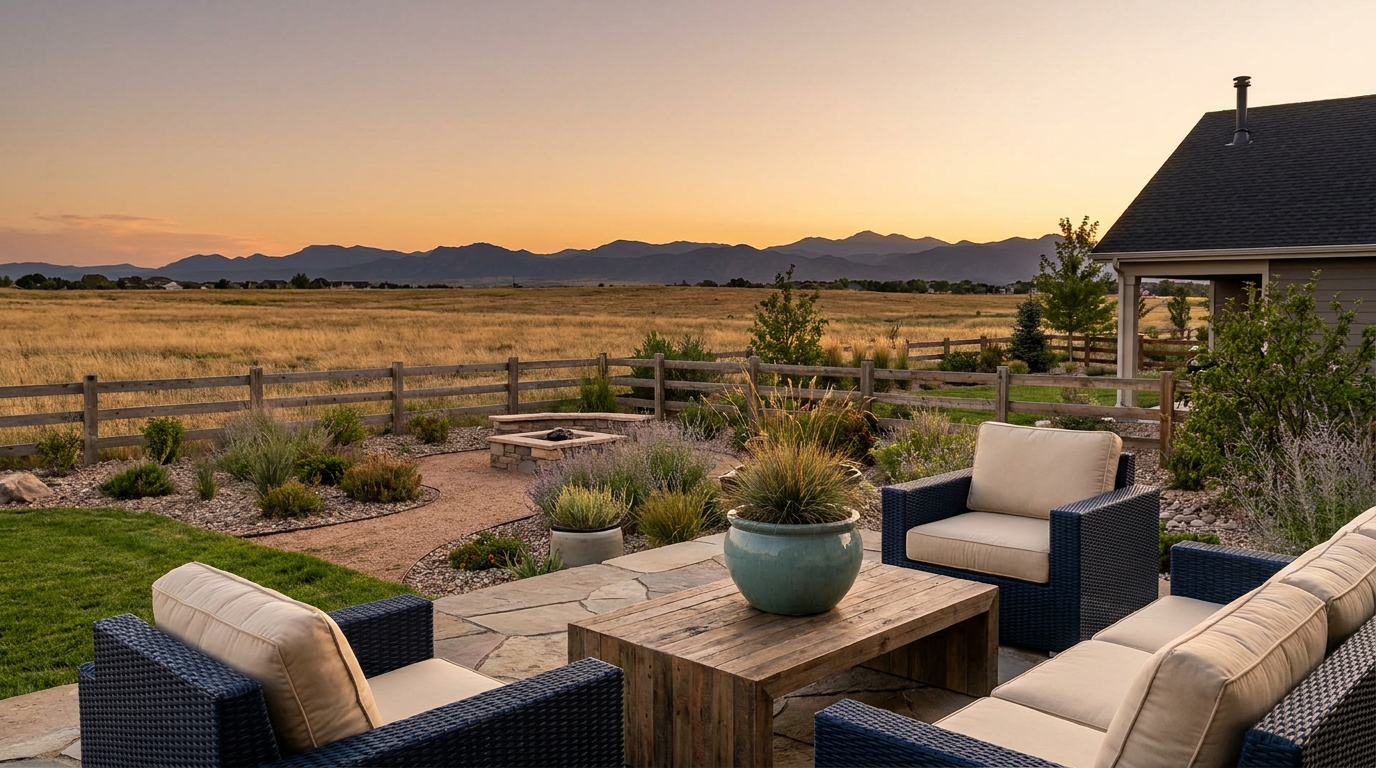
“Nobody’s behind us. That has to be worth something, right?” It might be. A backyard facing an open field offers a different experience than one facing another kitchen window. But when you’re selling a home in Firestone, the next question matters just as much: What is that land, and what can you honestly say about it? Buyers may see breathing room. They may also see a future construction site. Your job isn’t to settle every question about the future. It’s to make the property’s present value clear, check the facts you can check, and avoid selling a promise you don’t control.
An open field is a feature, not a guarantee
In Firestone, residential streets can meet agricultural parcels or land that hasn’t been developed. That edge between houses and open ground can be a meaningful part of a home’s appeal. Maybe the patio feels less enclosed. Maybe the main living room gets a long sightline instead of a fence-and-roof view. Those are real qualities. Show them.
But undeveloped land and protected open space aren’t interchangeable. Neither are farmland, a drainage area, and a future building site. An empty parcel tells you what’s there today. It doesn’t, by itself, tell you what will be there later. “Nothing behind you” is an observation. “Nothing will ever be built behind you” is a very different claim.
The useful distinction is simple: sell the experience the home offers now, and describe the neighboring land according to verified information. You don’t have to drain the appeal out of the listing. You do have to keep a pleasant view from becoming an unsupported assurance.
Build a small fact file before buyers start asking
Start with the parcel directly behind or beside your home—not the entire horizon. Identify it through public parcel records, then use the Town of Firestone’s planning resources or the relevant jurisdiction’s records to investigate its status. Weld County parcel records can help identify ownership, but ownership alone doesn’t establish what can be built.
Keep the questions separate. Current zoning is one piece. A long-range land-use designation is another. A submitted development application or approved plan is something else again. Don’t collapse them into “it’s staying open” or “houses are coming.” If a document is unclear, ask planning staff what it means and what it does not establish.
Put the useful records in one place with their dates and sources. A short, accurate summary supported by documents is more useful than a stack of screenshots from a neighborhood discussion. If you find no pending application, describe the scope and date of that search rather than treating it as proof that development can’t happen.
- Confirm the neighboring parcel’s identity and recorded ownership.
- Check applicable zoning, land-use maps, and available development applications or approvals.
- Ask about any public process underway and where buyers can verify updates.
- Separate documented facts from seller recollections and neighborhood speculation.
Price the setting without charging for forever
A buyer may pay more for a particular setting. That doesn’t mean every home beside a field deserves the same premium. The relationship between the house and the land matters. Is the view visible from the rooms people use most? Does the backyard feel private at ground level? Or do you need to stand in one upstairs corner to appreciate it?
For a Firestone seller, the best comparison starts with similar homes competing for the same buyers, then examines differences in lot position and outlook. A home beside documented protected land may not be a clean comparison for one beside a privately owned undeveloped parcel. The scenery can look similar while the buyer’s confidence is quite different.
I’d rather defend a price using the home’s actual advantages than ask buyers to pay for assumed permanence. If your priority is keeping the sale moving, don’t build the entire pricing case around a setting some buyers will discount. If you have more flexibility, you can give that feature appropriate weight—but still need evidence, not just affection for the view.
Let the marketing show the benefit and the context
Photograph the patio, the living-room outlook, and the usable yard. Show how the setting changes daily life. A photograph taken from the back door can say more than a dramatic aerial that makes the neighboring acreage look like part of your property. If an aerial uses boundary lines, have those lines checked against reliable property information. They shouldn’t be a creative exercise.
The wording should be equally grounded. “Backyard faces an agricultural parcel” may be accurate when the parcel’s use is verified. “Protected open-space backdrop” needs documentation supporting that description. Avoid “permanent privacy” unless there’s a verified basis for it; even then, be precise about what is actually protected.
And don’t airbrush the context. Where neighboring land is actively farmed, seasonal equipment, dust, or irrigation activity may be part of the setting. Where a home is near I-25 or another busy road, a wide-open view doesn’t necessarily mean quiet. The right buyer needs a reason to care about the property—not a reason to feel misled after arriving.
Decide how much uncertainty your selling plan can carry
A broad market launch can help you reach buyers who value the outlook and understand its limits. A more targeted or off-market approach may fit a seller who prioritizes privacy or fewer disruptions. Neither method changes the neighboring parcel’s status. Choosing a quieter sale isn’t a substitute for accurate information.
When a buyer asks what might happen behind the house, answer with the fact file rather than a prediction. Share the source, explain what remains unknown, and direct them to the appropriate planning office for their own review. For disclosure questions, use current Colorado forms and qualified professional guidance rather than guessing about your obligations.
Before deciding on price or photography, ask one useful question: What part of this setting do we own, what part can we document, and what part are we simply hoping will stay the same? That distinction gives you a stronger selling plan. It also keeps your favorite thing about the house from becoming the least clear part of the sale.
Frequently asked
Can I call the land behind my Firestone home open space?
Only use that description when reliable records support it. Land can look open while remaining privately owned and potentially developable. If its status is uncertain, describe the current physical setting accurately rather than assigning it a protected designation.
Will a possible future development lower my sale price?
Not automatically. Buyers weigh the home's price, layout, condition, setting, and the information available about nearby land. A specific approved project may affect their decisions differently than a vague possibility. Comparable sales and current competing listings help frame the pricing discussion.
Should I investigate neighboring land before listing?
Yes, especially if the setting will be a major selling point. A focused records check can reveal questions worth addressing before photography and pricing are finalized. Start with parcel identification and planning records. Build your description around what those sources actually establish.