
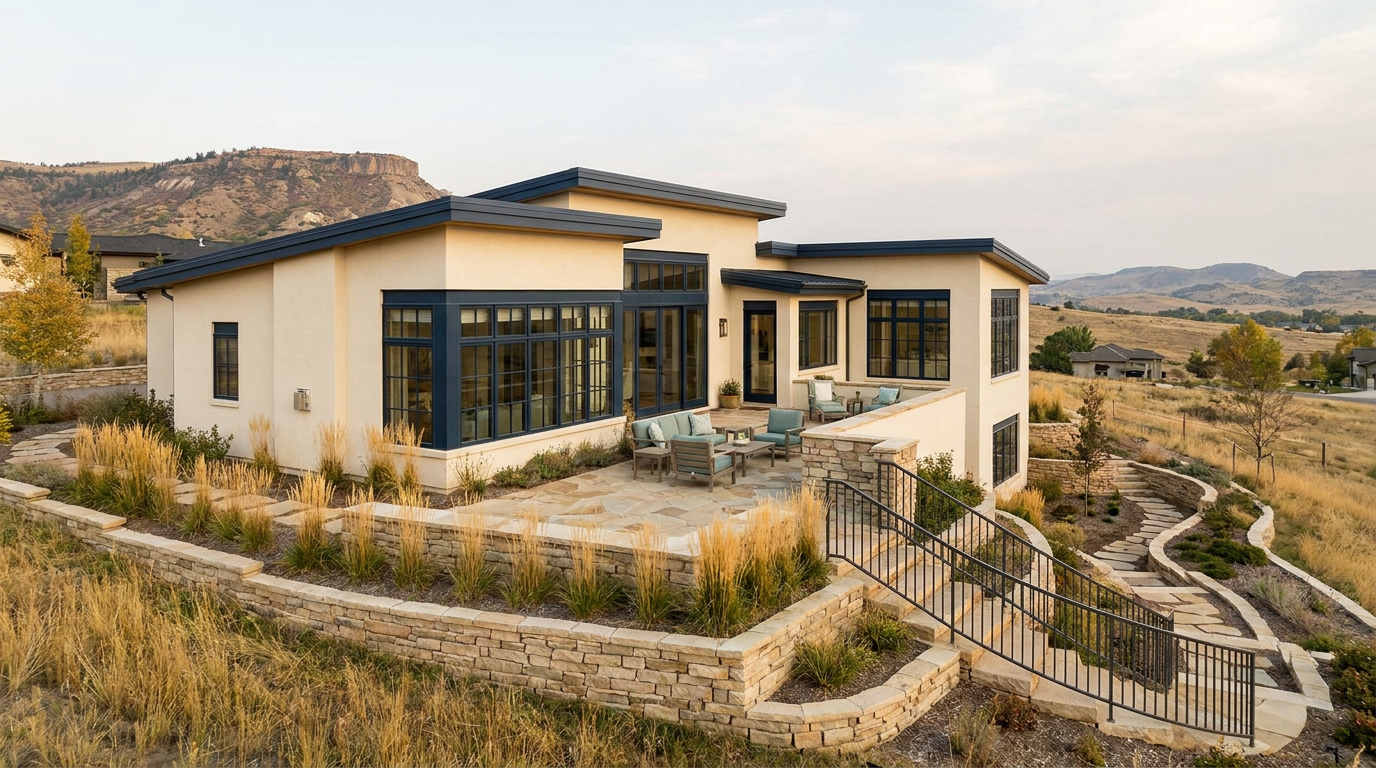
A hillside setting can give a Castle Rock home an appealing outlook, separation from neighbors, or a walkout lower level. It can also leave buyers wondering where the kids will play, how water moves during a storm, and who maintains that retaining wall. Selling a home in Castle Rock on a sloped lot means answering both sides of that equation. The goal is not to make every buyer love the terrain. It is to make the property's benefits and responsibilities clear enough that the right buyer can evaluate it without filling the gaps with worst-case assumptions.
Start With Usable Space, Not Just Lot Size
Castle Rock's rolling terrain and mesa settings mean two lots with similar acreage can function very differently. One may offer a broad, level backyard. Another may include a patio, terraced planting beds, and a steep area that is mostly visual separation. A lot-size figure does not explain those differences, and listing photos can make them harder to judge.
Before discussing price or marketing, walk the property as a buyer would. Identify where someone could realistically dine outside, garden, let a dog out, or move equipment between the front and back yards. Separate existing uses from possibilities that would require excavation, engineering, or approval. A compact, comfortable patio is a real feature. A claim that the hillside is perfect for a future pool is speculation unless the relevant feasibility work supports it.
- Identify level gathering areas and practical routes between them.
- Distinguish maintained yard from steep or difficult-to-access ground.
- Confirm boundaries before describing nearby land as part of the property.
Get Clear About Drainage and Retaining Walls
Along the Front Range, snowmelt and concentrated summer rain can expose drainage problems that are not apparent on a dry showing day. Buyers may notice soil channels, staining, erosion, or downspouts that discharge near the foundation. Those observations do not establish the cause or severity of a problem, but they often trigger questions. Gather any drainage plans, repair invoices, warranties, or evaluations you already have.
Retaining walls deserve the same attention. A small landscape border and a tall wall supporting a slope are not interchangeable. Leaning, bulging, displaced materials, or persistent wet areas warrant evaluation by an appropriately qualified professional; significant structural concerns may call for an engineer. Do not cover symptoms with fresh mulch or assume new landscaping solves water movement. Confirm ownership and maintenance responsibility rather than guessing from where a wall sits. If disclosure questions arise, work with your agent and a Colorado real estate attorney as appropriate.
Make Winter Access Part of the Conversation
A steep driveway can feel manageable during a sunny September showing and very different after snow falls. Shade, orientation, driveway pitch, and the route from the garage to the front door all affect day-to-day use. A north-facing area may hold snow or ice longer than a sunnier exposure, although neighboring buildings, trees, and weather also matter. Buyers benefit from a straightforward explanation of how you have managed the property, not a blanket assurance that winter access is never an issue.
Handle visible maintenance before photography and showings: secure loose handrails, clear walking routes, and address known trip hazards with the right contractor. Have a snow-removal plan for showings during winter weather. If a shared or private access arrangement applies, locate the relevant documents and confirm responsibilities. Practical answers about access are more useful than calling the driveway an easy fix or suggesting buyers can simply regrade it.
Price Against Homes With Similar Tradeoffs
A nearby sale is not automatically a strong comparable just because the house has similar square footage. For a sloped-lot property, the comparison should also consider outdoor usability, driveway access, walkout configuration, views, privacy, and apparent maintenance demands. A level backyard may matter more to one buyer than a distant view. Another may prefer the outlook and have little interest in maintaining a large lawn. Neither preference supports a universal slope discount or view premium.
Build the pricing discussion around recent closed sales and the alternatives buyers can currently tour, recognizing that active asking prices are not proof of value. Look for evidence of how comparable properties' benefits and limitations affected their positioning. When there are few close matches, acknowledge that uncertainty instead of inventing a precise adjustment. The seller's investment in terracing or retaining walls also does not automatically translate into an equal increase in market value.
Show the Terrain Honestly and Reduce Guesswork
Marketing should help buyers understand the property before they arrive. Use photographs that show the relationship between the house, patio, yard, and slope—not only the most flattering angle from the deck. Aerial images can add context, but any boundary illustration should be verified and clearly presented as approximate when appropriate. Do not describe adjacent undeveloped land as protected open space or promise permanent views without supporting information.
Prepare a concise property file with relevant maintenance records and available professional reports. Verify parcel information through Douglas County resources and applicable permit or land-use questions with the Town of Castle Rock or the responsible jurisdiction. HOA documents may also affect exterior changes. Buyers do not need an engineering lecture in the listing description. They need an accurate picture, accessible documentation, and a seller who is prepared for reasonable questions. That is a stronger position than hoping nobody notices the hill.
Frequently asked
Does a sloped lot lower my Castle Rock home's value?
Not automatically. A slope may create useful separation, views, or a walkout layout while limiting level yard space. Its effect depends on the whole property and competing homes. Local comparable sales are more useful than applying a standard discount.
Should I rebuild a retaining wall before listing?
Start with an assessment, not a construction commitment. The wall's condition, purpose, ownership, and any safety concerns matter. A qualified professional can help establish the scope; then you can evaluate repair and sale options with your agent.
Can I advertise space for a future deck or terrace?
Avoid presenting an unverified improvement as a ready-to-build feature. Terrain, drainage, setbacks, utilities, permits, and HOA requirements may affect feasibility. Describe what exists today and distinguish any documented potential from an idea a buyer would need to investigate.