
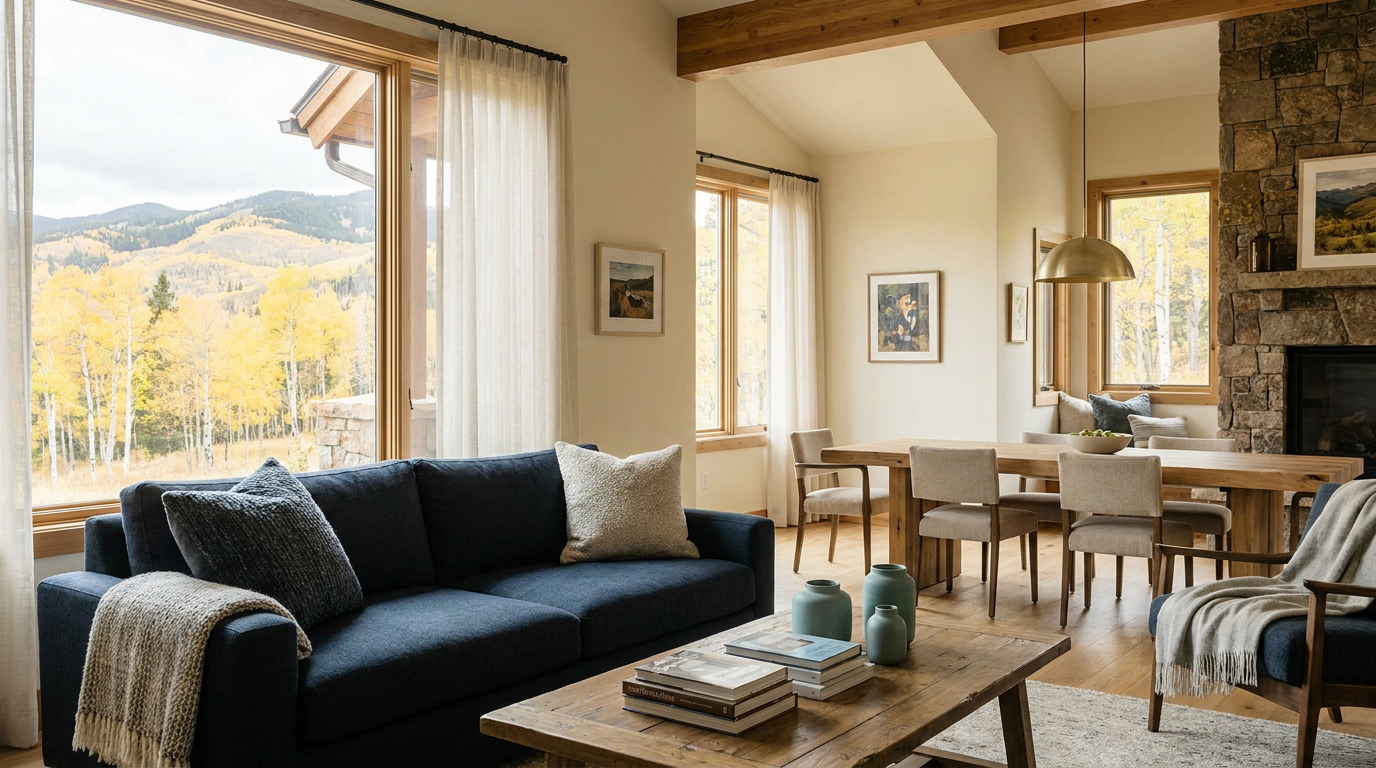
“Can we just photograph it so that room looks bigger?” Fair question. You want buyers to give your house a chance, not dismiss it because a camera makes the dining room look like a hallway. But there’s a difference between showing a home well and setting up a showing the house can’t deliver. A buyer who arrives expecting something else starts the visit disappointed. That’s not much of a negotiating advantage. Good Colorado home listing photos should do two jobs: make the property appealing and help buyers understand what they’re considering. Pretty matters. Accurate, useful, and persuasive matters more.
Decide what buyers need to understand before choosing photos
Before the photographer arrives, ask a question that has nothing to do with camera equipment: What about this house would make someone choose it over the other homes they can buy? Not everything you love about it belongs at the center of the listing. The kitchen you remodeled may be lovely. The genuinely useful feature might be the separate room that lets two people work from home without sharing every conference call.
In an older Longmont home, an addition may create living space that the front elevation doesn’t suggest. In an Erie home with an open main floor, buyers may need to see how furniture defines the dining and living areas. Those are different communication problems. They shouldn’t get the same automatic sequence of exterior, kitchen, bedroom, repeat.
My starting point would be three things buyers should understand before they book a showing. Then we build the photography plan around those. That keeps the listing focused on reasons to buy, rather than a collection of attractive surfaces.
Build a photo sequence, not a room inventory
Buyers don’t necessarily study every image. The opening photos need to establish what the home offers, and the rest should make the layout easier to follow. A strong exterior can lead. So can a compelling interior, when the listing platform allows it. There’s no prize for making someone scroll through six nearly identical front-yard angles before discovering the room that makes the house interesting.
Think of the sequence as a short, sensible tour. Show the main living area, establish its relationship to the kitchen, then explain the other spaces that matter. A close-up of a faucet tells buyers very little if they still can’t figure out where the dining table goes. Detail shots can add texture. They shouldn’t replace information.
This is especially important when a house has an unusual layout. A room can photograph beautifully in isolation and still leave buyers confused about how they’d use it. Photos, captions, and a clearly labeled floor plan can work together. Check the floor plan for accuracy, and identify measurements as approximate where appropriate.
Make it inviting without changing what exists
Professional photography can correct the camera’s limitations. Balanced lighting helps buyers see a bright window and the room around it. Thoughtful angles make a space legible. But stretching a room, removing permanent features, or editing away a neighboring building creates a different problem. You’re no longer helping buyers see the house. You’re asking the showing to correct the advertisement.
Virtual staging deserves the same discipline. It can help explain an empty room, particularly when its purpose isn’t obvious. It shouldn’t suggest that an oversized sectional fits comfortably when it doesn’t. Clearly identify virtually staged images, follow applicable advertising and listing-service requirements, and include unaltered views so buyers can distinguish the space from the illustration.
You don’t have to lead with every limitation. You also shouldn’t conceal a feature that materially changes how the property feels or functions. Photos aren’t a substitute for required disclosures, either. The practical test is simple: Will someone standing in this room feel that the listing represented it fairly?
Prepare for the camera, but keep the house livable
Photo preparation is a concentrated task, not an instruction to erase your life for weeks. The camera tends to flatten depth and amplify visual clutter. A few objects on a counter can look like many. A chair that’s easy to walk around may block the only angle that explains the room. Temporary adjustments can help without turning into another renovation project.
Prioritize what makes space and function clear. Move the extra chair. Open the window coverings where appropriate. Clear the route from the living room to the patio. Secure personal documents, medications, valuables, and identifying family information before photography. These are small actions with a specific purpose, not a verdict on how you live.
For a late-October shoot along the northern Front Range, plan around available daylight and actual property conditions. Heavy decorations can distract from the entrance and make images feel dated later. If you use an older seasonal yard photo, identify it appropriately and confirm it still represents the property. A summer garden image can provide context; it shouldn’t imply that landscaping remains unchanged when it doesn’t.
Judge the photos by the expectations they create
Lots of clicks don’t necessarily mean the listing is doing its job. Neither do lots of showings if visitors consistently arrive expecting a different house. When feedback repeatedly mentions smaller rooms, an unexpected layout, or outdoor space that feels unlike the photos, review the presentation before assuming price is the only issue. Pricing still matters. Photography cannot make an unsupported price sensible.
The right scope also depends on your selling plan. A full public launch may benefit from professional photography, a floor plan, and selected detail images. A limited off-market approach may call for a smaller, accurate package that lets prospective buyers evaluate the opportunity. Neither route excuses misleading images, and more media isn’t automatically more useful.
Before approving the listing, look through it on your phone as a buyer would. Can you understand the house? Do the most useful features appear early? Does anything promise more than the property delivers? The goal isn’t to make every buyer book a showing. It’s to give buyers whose needs fit the property a clear reason to come—and fewer reasons to feel misled when they arrive.
Frequently asked
Should every room appear in my listing photos?
Not necessarily. Cover the spaces buyers need to evaluate the home, but skip redundant angles. If omitting a room would make the layout or condition misleading, include an accurate view. Completeness matters more than sheer photo count.
Do I need to move out before listing photos are taken?
Usually not. A room-by-room preparation plan can make an occupied home photograph well. Focus on clear surfaces, furniture placement, lighting, and privacy. Decide in advance where temporarily moved items will go so the photographer can work efficiently.
Can better listing photos fix a home that isn't selling?
They can help when weak or confusing images are holding buyers back. They won’t resolve every pricing, condition, or access issue. Start by comparing the listing with showing feedback: Are buyers rejecting the actual house, or arriving with the wrong expectations?